
For years, we have been calculating and planning aquaponics systems of various sizes and configurations as part of feasibility studies. Now we would like to offer interested parties the opportunity to use our aquaponics calculator to roughly estimate the costs of their own projects with just a few details.
We need to move beyond the "rough estimate".
Often, prospective clients ask us for "just a very rough estimate" to get an idea of whether an aquaponics project can be economically viable and how high the investment would be. It's perfectly understandable that an initial idea doesn't immediately translate into the willingness to commission a costly preliminary planning phase, including a feasibility study.
The disadvantage, from our perspective, was that—regardless of how precise the assessment needed to be—we always had to ask the same questions and perform the same calculations. Unfortunately, we couldn't omit any factor; we had to complete all the assumptions to be able to make any statements about investment costs and profitability. A little bit of calculation simply isn't possible. For this reason, we wanted to provide an easily accessible tool that allows for an initial assessment without significant investment.
Aquaponics should become more well-known
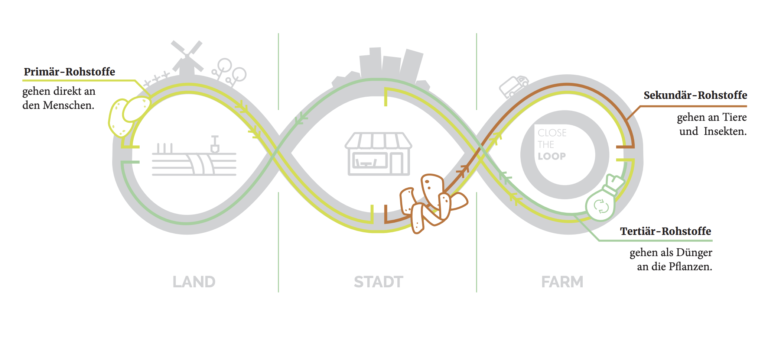
Last but not least, even after our company was founded over 10 years ago, we still face the problem that very few people are even familiar with aquaponics as a form of circular economy. This often applies to people who are deeply involved with sustainability and environmental protection and who show particular interest in aquaponics. We also frequently contact people who can't implement their own aquaponics project but are so enthusiastic about the idea that they ask how aquaponics could be promoted in their communities.
But it's not the horticulturalists, the farmers, or the biogas plant operators who are the primary targets, even though the prospects for profitability increase dramatically with the use of waste heat. Our goal is not only to raise awareness of aquaponics itself, but also to reach those already working in agriculture and horticulture.
The economic viability of aquaponics projects should become more widely known.
Another reason why we make an online version of our aquaponics calculator publicly available is that many people still believe such a project isn't worthwhile and can only be operated with ongoing subsidies. This is partly based on the experiences of the few projects that have been implemented so far. However, these were often too small to allow for any economies of scale.
However, since the profitability of agriculture and horticulture depends on the available land, projects have often been conceived on too small a scale. The effects of economies of scale also become very clear when calculated with the calculator.
We want to showcase the many possibilities of aquaponics
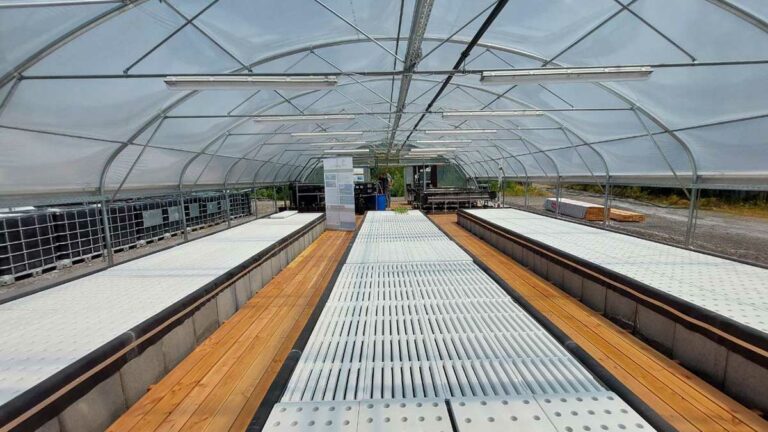
But aquaponics isn't just interesting for investors, farmers, or horticulturalists. There are situations where even an aquaponics system of just 500 square meters can be economically viable. For example, with seasonal cultivation in an inexpensive, lightweight greenhouse with double-layered foil and a passive thermal storage system (as a heat wall). This also makes it interesting for projects by citizen initiatives, community-supported agriculture (CSA), or cooperatives. However, we've received very few inquiries from these groups so far, as it's currently almost impossible for them to get a realistic assessment of the topic.
Disadvantage of aquaponics: It is complex
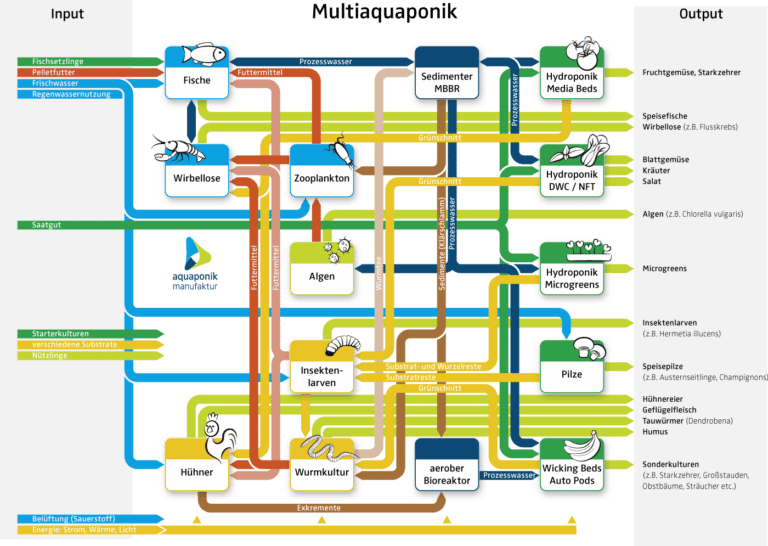
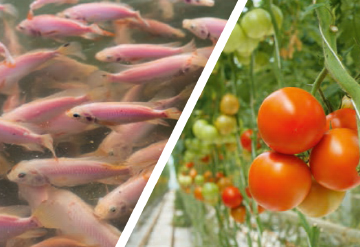
And that brings us to the real disadvantage of aquaponics, especially regarding large-scale projects. It's so complex that even experienced mathematicians with an agricultural background struggle to assess a project's economic viability. The dual use of fish feed as a nutrient source for both fish and plants defies any rough calculation, as nutrient turnover is subject to complex biological processes. Furthermore, the knowledge about the conditions for raising fish and plants in a closed system is currently divided between two separate industries that have had little interaction. And that's what we want to change.
Advantage of aquaponics: It makes operators capable of taking action.
However, in our view, the advantages of aquaponics outweigh the disadvantages. Besides its sustainability, the comparatively simple implementation of plant cultivation in soilless conditions is particularly compelling. It can become a kind of food insurance policy and simultaneously represent an economically attractive additional source of income.
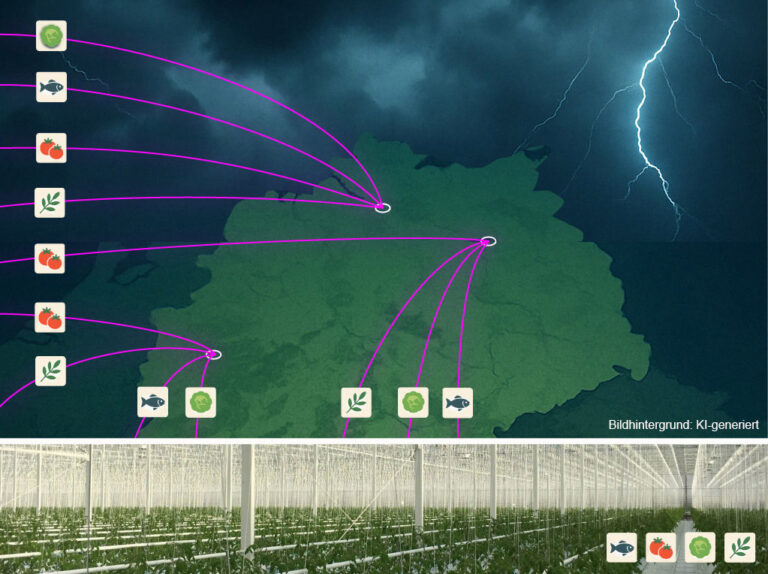
For those seeking greater independence from complex supply chains, rising energy prices, or fertilizer costs, aquaponics offers an approach that addresses several challenges simultaneously. And as logistics and fertilizers become more expensive, aquaponics becomes increasingly competitive.
What happens next
We will continue to develop the web application for the aquaponics calculator in the coming months. The goal is to gradually integrate additional functions from our internal application and continuously expand the calculator, for example, to also calculate the heating of the system using waste heat. At the same time, we are eager to see how the tool is used and what feedback we receive. We will also find out whether the server will be able to handle the load or if we will need to upgrade it. Since the calculations are complex, we will be closely monitoring the situation and may need to make adjustments. Otherwise, we expect that this free service will encourage more people to consider aquaponics projects as a potential solution.
Enough of the intro: Click here to access our online version of the aquaponics calculator..