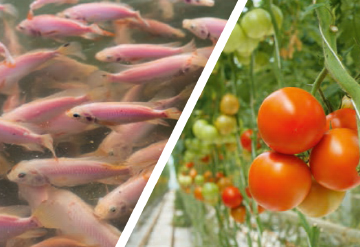

How companies with surplus heat can turn their locational advantage into regional food production
Aquaponics benefits greatly from a reliable heat supply. Companies with waste heat, affordable electricity, and existing space/infrastructure – such as biogas plants, data centers, or factories with heat-intensive processes – can use aquaponics to produce high-quality, locally sourced food, close cycles, and improve their carbon footprint. APM provides support from feasibility analysis to implementation.
Why heat is so crucial in aquaponics
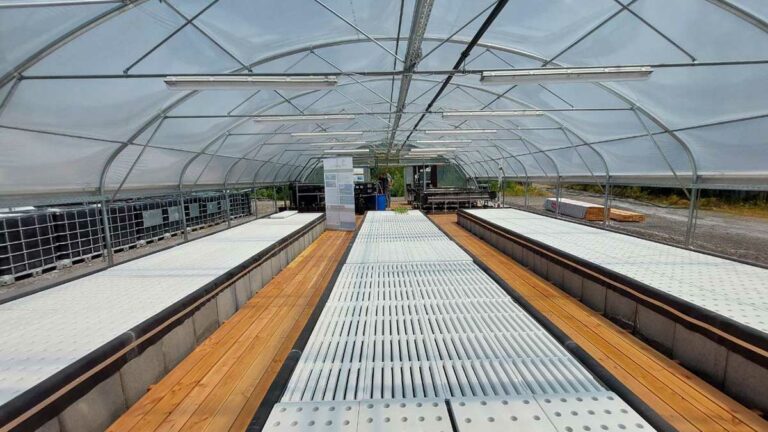
The heat requirement of a year-round operated aquaponics system occurs primarily in greenhouses. The high humidity (due to plant evapotranspiration) necessitates continuous air exchange – this limits the possibilities of purely passive thermal insulation compared to buildings like passive houses. Furthermore, such a large glass surface has far poorer insulating properties than are possible with house walls. Consequently, heating is one of the largest cost factors and a key factor for economic viability.
Locations with available waste heat have a clear advantage here: They reduce operating costs, stabilize the climate in the greenhouse and increase yield security – especially during winter operation.
Which industries benefit from it?
Many businesses continuously generate usable waste heat or have access to cheap electricity and suitable space. Typical examples:
-
Biogas plants / CHP sites (Combined heat and power plants, fermenters, heat exchanger circuits)
-
Data centers (continuous, easily controllable waste heat)
-
Industry with heat-intensive processes (e.g. metal/glass/ceramics, food processing, paper)
-
Thermal power plants / district heating networks (lower temperature levels, secondary consumers possible)
-
Wastewater treatment plants & technical infrastructure (Biogas plant/CHP; wastewater heat via heat pump)
Combining waste heat and aquaponics can combine location advantages.
Sites with aquaponics potential combine three levers: usable operational waste heat, inexpensive electricity (e.g., from CHP or PV), and the shared use of existing space and infrastructure – from pipes and buildings to foundations. This combination reduces CAPEX/OPEX, allows for more stable climate control in the greenhouse, and makes the system more predictable year-round.
Added value beyond pure waste heat utilization
Aquaponics is not just a "waste heat sink", but also generates independent potentials that can be very economically relevant:
-
Synergies from land, waste heat and agricultural infrastructure – tailored to your business
-
Local value creation: High-priced, fresh products (salads, herbs, vegetables, fish)
-
Product range variety: Many crops are possible – ideal for direct sales, gastronomy, and manufacturing.
-
Security of supply: Regional production, short supply chains, year-round planning
-
Resource efficiency and quality: Water and nutrient cycles, reduced imports, reduced losses, cleaner products.
Aquaponics modules can either be integrated in existing buildings or realized as new buildings, according to available space, heat source or logistics. realizable – depending on existing stock, heat source, space and logistics.
Legal & strategic framework (brief overview)
Many companies are already dealing with waste heat conceptsclimate impact and energy efficiency. Aquaponics can contribute to:
-
zur decarbonization strategy contribute (beneficial sink for unavoidable waste heat),
-
ESG/CSR goals support (regional, safe, transparent),
-
in Cooperations with municipalities/network operators be embedded (e.g., district heating networks, third-party consumers).
Note: Requirements and funding conditions are always individual and context-specific. We take these into account in project planning.
Special case biogas plants – the special lever
Aquaponics is particularly attractive for operators of biogas plants because it combines several synergies:
-
Proximity to agriculture and experience with nutrient flows
-
Diversification into new business fields
-
Direct sales and local brand building towards end consumers
-
CHP waste heat & self-generated electricity reduce operating costs
-
Future option nutrient processing (see next section)
The future of nutrient utilization: Digestate as a potential carrier
Digestate from biogas processes are nutrient rich and is also of interest for plant production in principle. In the future, a partial stream can – after suitable reprocessing and sanitization be used as Nutrient source for hydroponics .
Technically, proven components are already available for this purpose, such as UV treatment, ozonisation,thermal hygenisation. What is already visible today as an R&D topic and in pilot applications will open up possibilities in the medium term. new circulatory synergies between biogas and aquaponics.
Economic efficiency – the most important levers
-
Economic efficiency – the most important levers of waste heat
-
Energy costs (Electricity/heat) and self-generation
-
Plant size & crop choice (revenues, turnover, sales)
-
Sales channels (Direct marketing, gastronomy, trade)
-
Use of existing infrastructure (CAPEX/OPEX lever)
APM evaluates these factors in a feasability study and models scenarios for investment and operation – including seasonal strategies.
Quick check: Is your location suitable?
Yes, if at least two of the following points apply:
-
Continuously available waste heat (year-round or predominantly)
-
Cheap electricity (CHP, PV, load management)
-
Open spaces/buildings near heat sources in unmittelbarer Nähe der Wärmequelle
-
Readiness to Direct sales/Partnerships with regional customers
-
Strategic interest in Circular economy & climate goals
Aquaponics is not only an innovative circular economy, but can also create further synergies, which are particularly beneficial in economically positive figures.
Are you interested? You can reach us at the following number: (+49) 02835 9819463.
Contact us by email: info@aquaponik-manufaktur.de