
Change in district development
Just a few years ago, the focus of district development was mostly on office space, parking spaces, and standardized commercial uses. Today, the perspective is changing: the demand for living districts is growing – places that not only provide opportunities for work and living, but also integrate local businesses, promote interaction, and create a pleasant atmosphere. Project developers and architects are therefore faced with the task of rethinking spaces and translating social change into concrete spatial concepts.
In this context, Controlled Environment Agriculture (CEA), and aquaponics in particular, is gaining importance. It enables the local production of high-quality food in closed, safe cycles – even on areas previously considered unsuitable. This transforms unused brownfield land into a productive space with a positive impact on the entire neighborhood.
What aquaponics can achieve
Aquaponics brings supplies closer, turns areas into places of production, fits into neighborhood concepts, increases the value of the location, and operates in reliable, soil-independent cycles.
- Local supply:Production of fresh, high-quality food directly in the neighborhood, short distances, high quality.
- Spatial Transformation:Conversion of brownfield or contaminated areas into productive sites.
- Integration into neighborhood concepts:Combination of production, gastronomy, education and visitor access.
- Increase in value:Aquaponics as a visible, sustainable building block with a lighthouse character.
- Safe cycles:Food production independent of soil quality or existing contaminated sites.
How aquaponics works in projects
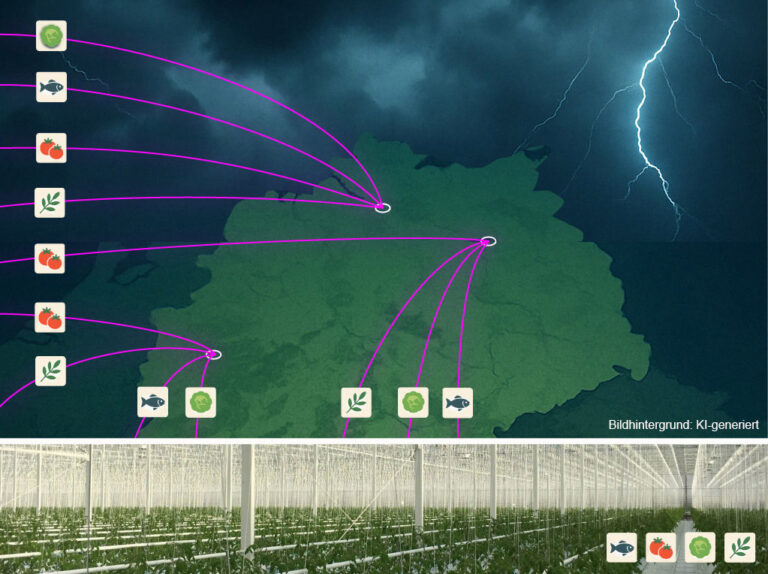
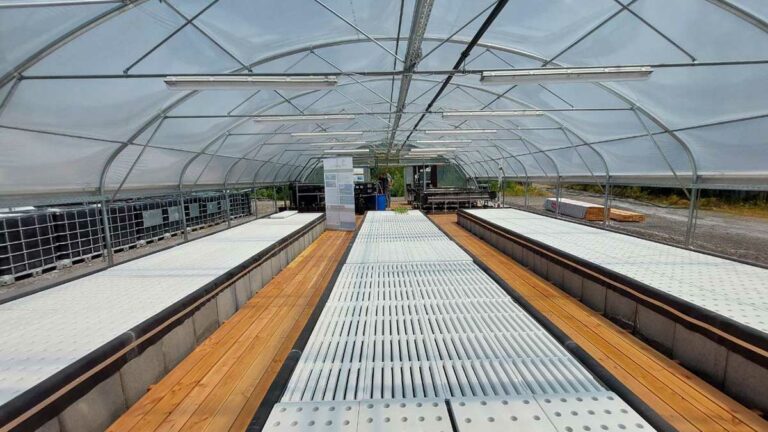
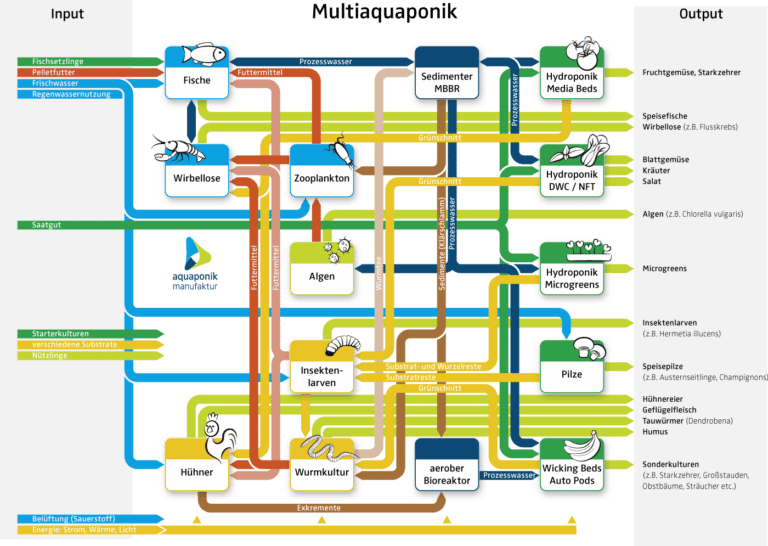
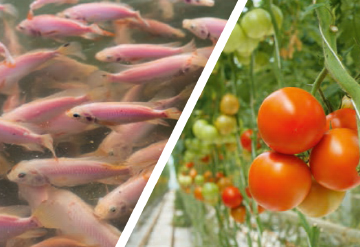
Aquaponics utilizes closed material cycles in which fish and plant production are intelligently linked. The modular design allows systems to be precisely adapted to buildings, spaces, and project goals. This creates flexible solutions – from smaller modules in a mixed-use neighborhood to large-scale conversion of post-industrial sites.
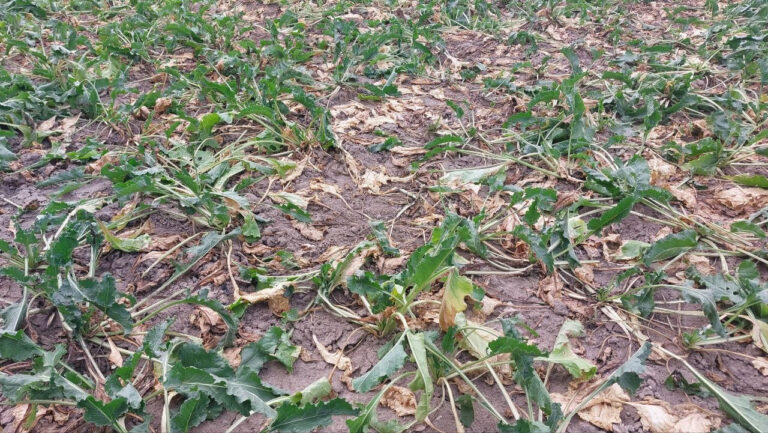
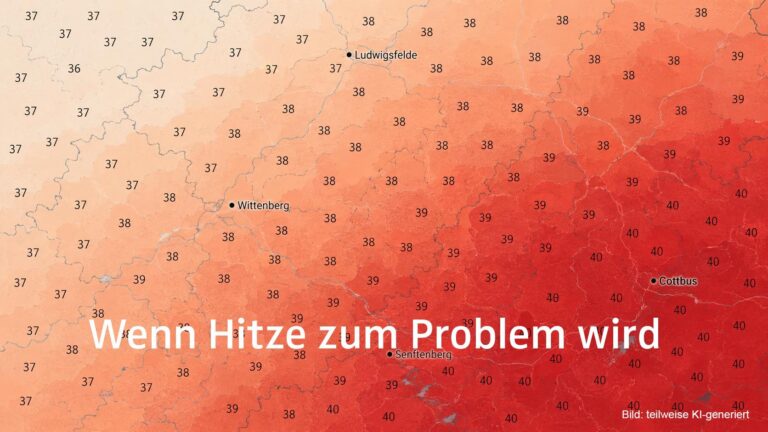
Particularly important: The CEA approach (Controlled Environment Agriculture) not only consistent quality guaranteed, but also a high resilienceWhile traditional agriculture is increasingly suffering from extreme weather, droughts, and heat waves, production in closed, controlled systems remains stable. This creates planning security and reliability for project developers – and trust among users and consumers.
Furthermore, integration with restaurants, processing, or educational opportunities enables direct value creation in the neighborhood. Production becomes visible, tangible, and part of the local identity.
Where aquaponics finds its place in district development
From post-industrial areas to residential areas, aquaponics can be scaled and combines production, accommodation, and communication to provide tangible local benefits.
- Transformation of post-industrial areasFormer industrial or railway areas are becoming productive locations with a strong appeal.
- Commercial and mixed-use districtsSynergies between production, gastronomy and retail create a lively neighborhood experience.
- Lighthouse projectsAquaponics as a visible sustainability component – with potential for visitor guidance and exhibition character.
- Residential areasCombining local supply, education and interaction – food production as part of everyday life.
The difference lies in the result: Aquaponics does not fit into a project as an isolated technology, but actively contributes to the creation of a lively neighborhood A district that combines work, amenities, restaurants, and quality of life – thus setting new standards in urban development.
Next step: Exchange on the project approach
We offer a free consultation (approximately 30 minutes). Together, we will review your project idea, discuss possible implementation options, and demonstrate ways to integrate aquaponics into existing planning approaches.
Result: You will receive concrete advice on how aquaponics can be a sustainable building block for enhancing your neighborhood development.
Call us. You can reach us at: +49 02835 9819463
Contact us by email: info@aquaponik-manufaktur.de
Datenschutzhinweis: Die hier erhobenen Daten werden nur zur Bearbeitung des Rückrufwunsches bzw. zur Kontaktaufnahme per E-Mail verwendet.

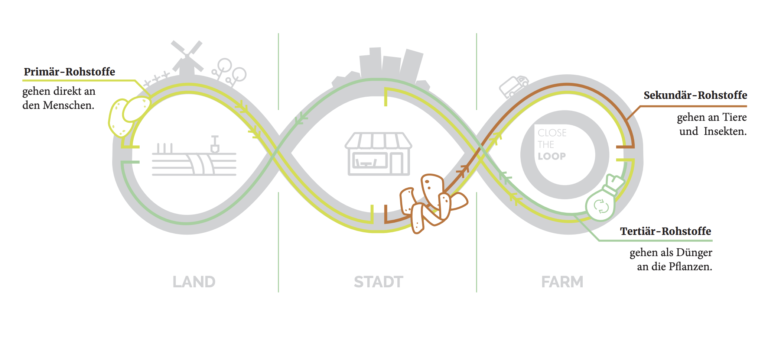
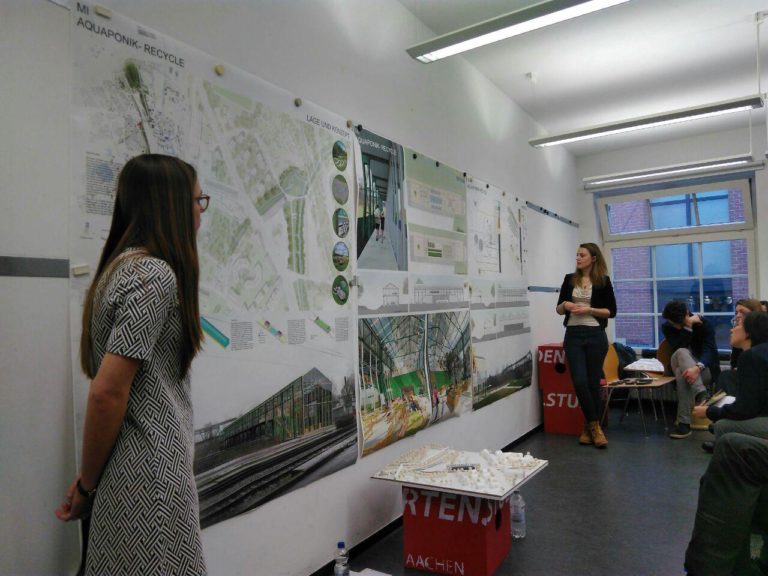
CLOSE THE LOOP – Luftbild Bahngelände © Illustration Hanna Bonekämper, Aufbruch am Arrenberg e.V.