When water is unavailable during critical growth stages, it becomes a bottleneck for agricultural production. Aquaponics can reduce water use by up to 90 percent and, as a form of Controlled Environment Agriculture, turn water into a controlled component of the production system.
Water scarcity is not only visible in dry soils and low river levels. It is increasingly becoming an economic issue. Agriculture, drinking water supply, industry, energy generation and inland shipping all depend on sufficient water availability. When dry conditions persist, these sectors come under growing pressure at regional level.
In Germany, water scarcity has so far primarily occurred on a regional and seasonal basis. For agriculture, the decisive factor is whether water is available at a specific location during critical stages of plant growth.The German Environment Agency points out that these regional and seasonal differences have become particularly apparent during the dry years since 2018 and are expected to intensify further as a result of climate change. [1.]
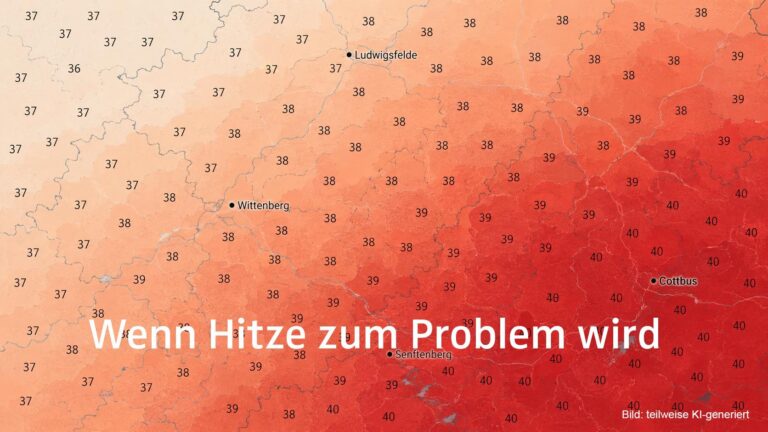
Water is therefore increasingly becoming a limiting factor in agricultural production. When rainfall is absent during important growth stages and the root zone dries out, plants experience water stress and are unable to develop under optimal conditions. Additional heat simultaneously increases evaporation and water demand.
In July 2026, the European Commission’s Joint Research Centre reported that persistent water deficits and heat stress had already caused widespread damage to agricultural crops in parts of Western and Central Europe. [2.]
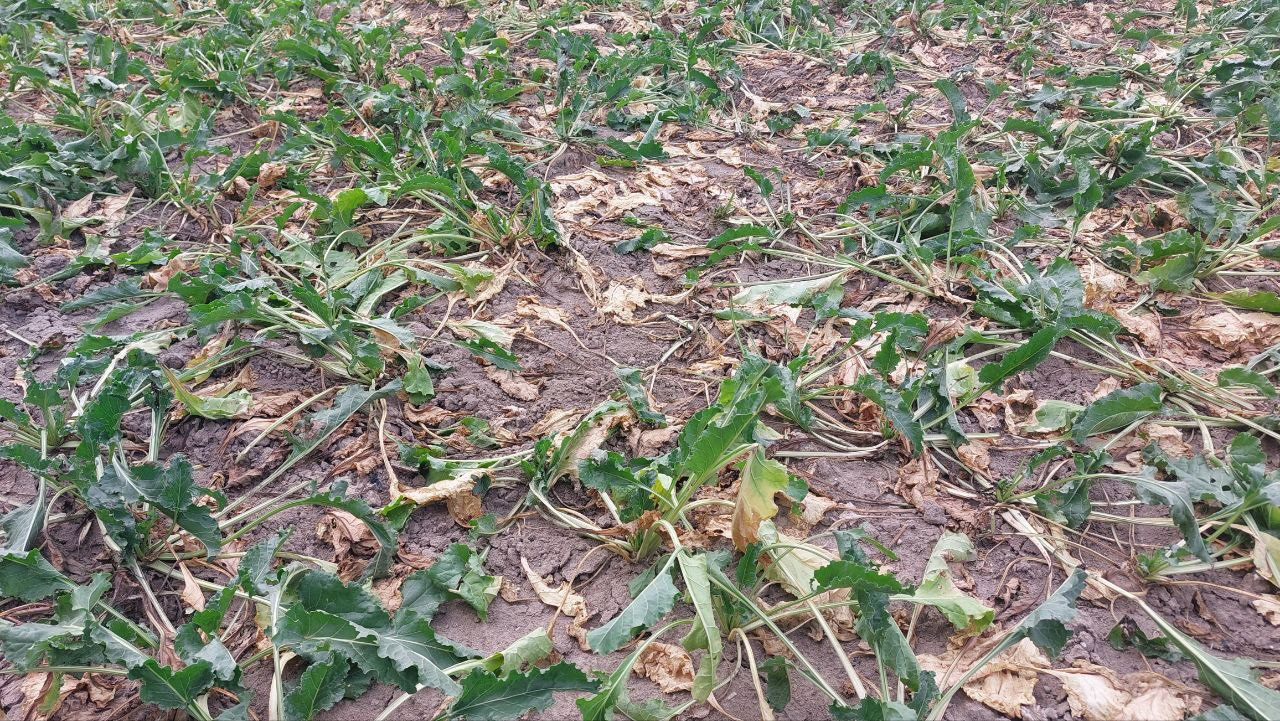
The consequences are visible in the fields: plant growth slows, leaves wilt or die, and yields become less predictable. Irrigation can partially compensate for these conditions. However, it depends on water being available in the first place, on permission being granted for its abstraction, and on whether it can be delivered to the fields at a reasonable cost.
A fundamental condition of agricultural production is therefore changing: Water can no longer be regarded everywhere as a background resource that is available at all times.. Es wird selbst zu einem Faktor, nach dem Produktionssysteme geplant und bewertet werden müssen.
Agriculture Loses Water from the Production System
In conventional crop production, water enters an open production system through rainfall or irrigation. Only part of it remains available to the plants; additional water evaporates, percolates into deeper soil layers or runs off at the surface.
These losses cannot be eliminated entirely and are inherent to open agricultural systems. They become increasingly problematic where water availability declines while higher temperatures also increase evaporation. Under these conditions, simply supplying additional water is no longer sufficient. What matters is how efficiently the available water can actually be used for plant production.
Nutrients can also leave these open systems. They may be displaced or leached by water, or transported into soil layers where they are less accessible to plants. Water and nutrient management therefore cannot be considered separately.
This does not mean that open-field agriculture can or should be replaced altogether. Cereals, grassland, field crops and many other agricultural products will continue to be produced across large areas. However, open systems increasingly reach their limits where high yields on limited land, reliable production or particularly efficient water use are required.
This is where the transition to Controlled Environment Agriculture (CEA) concept.In controlled production systems, water, nutrients, temperature and other growing conditions are not merely monitored, but actively managed. Water therefore changes from an external factor that can only be controlled to a limited extent into a predictable component of the production system.
Aquaponics Keeps Water in Circulation
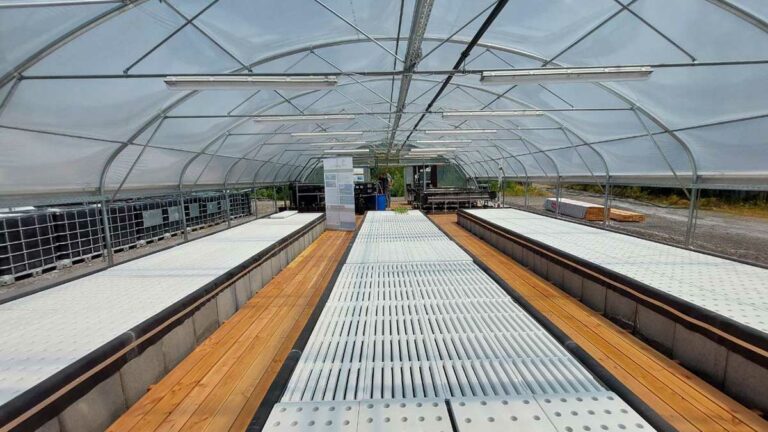
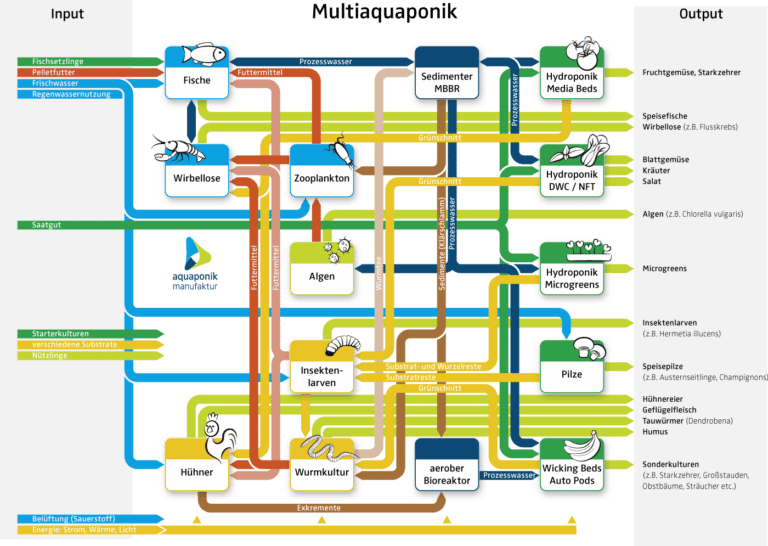
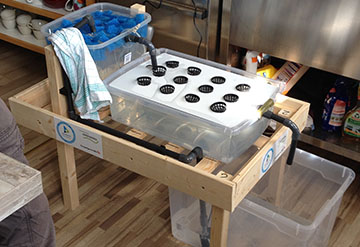
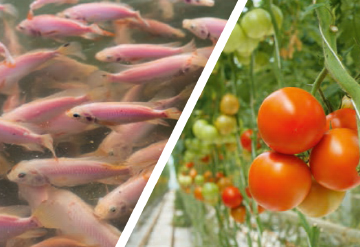
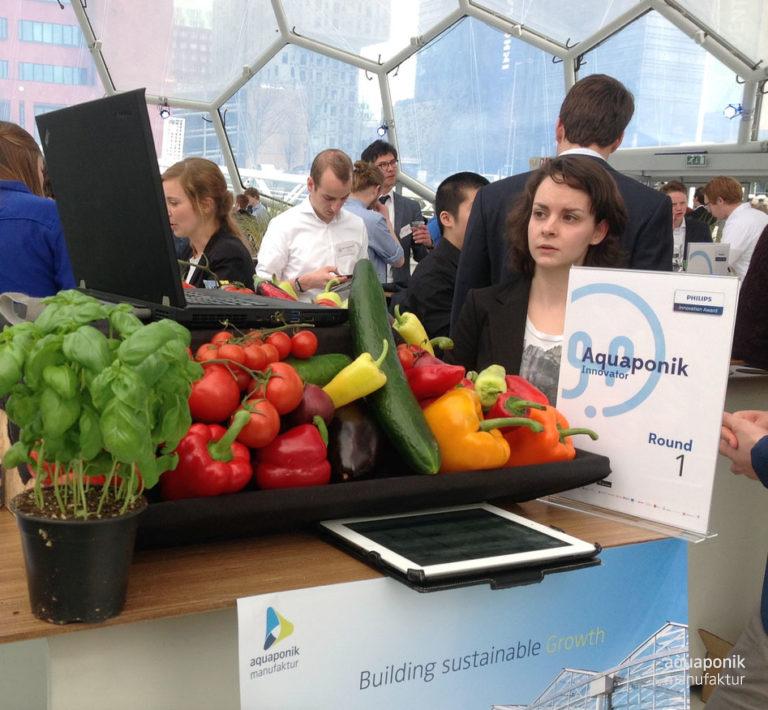
Aquaponics can be operated as a form of Controlled Environment Agriculture (CEA). It combines recirculating aquaculture with soilless plant production, usually in a greenhouse or another controlled production environment. Rather than being discharged after a single use, water is circulated between fish production, water treatment and plant cultivation.
In aquaculture, fish obtain nutrients from their feed. They use part of these nutrients for growth and metabolism, while another part enters the water through their excretions. After mechanical and biological treatment, this water is used to supply the plants. The plants remove water and nutrients from it, after which it can be returned to the aquaculture system.
Fresh water is required to replace the quantities that actually leave the system. These losses result mainly from plant transpiration, evaporation and technical or operational processes.
As a result, aquaponics can reduce water use by up to 90 percentThe exact savings depend on the location, climate, crops, technical design and the system used for comparison. The FAO reports water savings of up to 90 percent for integrated aquaponic systems; some systems require only a small percentage of the total circulating water volume as daily make-up water. [3.]
However, the key advantage is not simply the lower level of water consumption. With the transition to CEA, the role of water within the entire production process changes. Its availability no longer depends on sufficient rainfall during the growing season, the water-storage capacity of the soil or the feasibility of large-scale irrigation.
Instead, water becomes a controlled resource that is used repeatedly. Its quantity and quality can be measured, monitored and adjusted to the requirements of both fish and plants. This does not eliminate the need for water. However, water largely loses its role as an uncontrollable bottleneck in plant production.
Aquaponics therefore creates a production environment in which reliable output can be maintained even during prolonged dry periods—provided that the comparatively small amount of required make-up water remains available. This is the fundamental difference between irrigation alone and a controlled recirculating system.
Thinking About Water and Nutrients Together
Aquaponics does more than reduce water use. It also links the nutrient cycles of fish production and plant cultivation.
Part of the nutrients contained in fish feed enters the water through excretions and uneaten feed. After treatment, these nutrients become available for plant production. Nitrogen and phosphorus in particular therefore originate directly or indirectly from the fish feed.
Depending on the plant species, fish stocking density, feed and technical design, individual nutrients may still need to be supplemented, including potassium, calcium, magnesium or iron. However, plant nutrition does not rely entirely on separately applied fertilisers. A substantial share is already generated within the coupled system.
Aquaponics therefore combines two tasks that would otherwise have to be addressed separately: nutrients must be removed from the water in aquaculture, while they must be supplied in plant production. In aquaponics, the output of one process becomes an input for the other.
This coupling is particularly important where resources are becoming scarcer. Aquaponics not only reduces water demand, but also lowers the need for additional nutrient inputs and can help limit nutrient losses to the environment. Its strength lies not in one isolated saving, but in the integration of several material flows within a controlled recirculating system.
Where Aquaponics Is Particularly Suitable
It is particularly suitable in places where water availability is limited or becomes seasonally constrained. Because most of the water remains within the system, continuous production can be maintained with comparatively small amounts of make-up water.
Aquaponics can also be useful where only limited land is available. Fish and plant production can be combined with high land-use efficiency, making the system relevant for smaller farms, urban areas and regions with high land prices.
Usable waste heat can provide an additional location advantage. Heat from biogas plants or industrial processes can be used for greenhouses and aquaculture and integrated into an additional business activity.
Aquaponics is also suitable in regions where food is intended to be produced close to the market. Greenhouse crops and fish can be produced year-round or seasonally for direct sales, regional restaurants, retail or institutional catering. Short transport distances and predictable production make it easier to coordinate supply with specific buyers.
Aquaponics is therefore often most suitable not because of one single advantage, but because several location factors coincide:
- limited water availability
- scarce or expensive land
- available waste heat
- regional market opportunities
- the need for an additional business activity
- and the aim of achieving controlled and reliable production.
Whether a system is technically and economically viable depends on the specific combination of these factors. You can use our aquaponics calculator to explore how different location factors affect production and economic performance based on your own assumptions.
Not an Emergency Measure, but Resilient Infrastructure
Aquaponics should not become part of agricultural adaptation strategies only once water shortages are already acute, harvests are failing or supply chains are under pressure. Such systems require planning, permits, technology, expertise, market channels and an established operational routine.
Their value lies above all in proactive adaptationAquaponics creates production capacity that is considerably less sensitive to prolonged dry periods, irregular rainfall and restricted irrigation than open-field systems. At the same time, fish and vegetables can be produced regionally and closer to consumers, restaurants and retailers.
Aquaponics can therefore complement the food system with a form of production that uses water efficiently, makes yields more predictable and links several material flows.
For this reason, aquaponics should not be regarded merely as a specialist technology or an exceptional sustainability project. It is a form of controlled food production designed for conditions in which water can no longer be assumed to be available everywhere and at all times.
The crucial question is therefore not only: What do we do when water becomes scarce?
But already today: Which production systems will continue to operate reliably as drought, heat and competition for water increase?
Aquaponics is not a universal answer. But it is a concrete and already available way of systematically incorporating water scarcity into the planning of agricultural production.
Sources
[1.] Website Umweltbundesamt:
[2.] Website of the EU about JRC MARS Bulletin
[3.] Website of FAO with the article: Artikel „Every Drop counts“